Mike Beere, Ian Jeffreys and Nicki Lewis
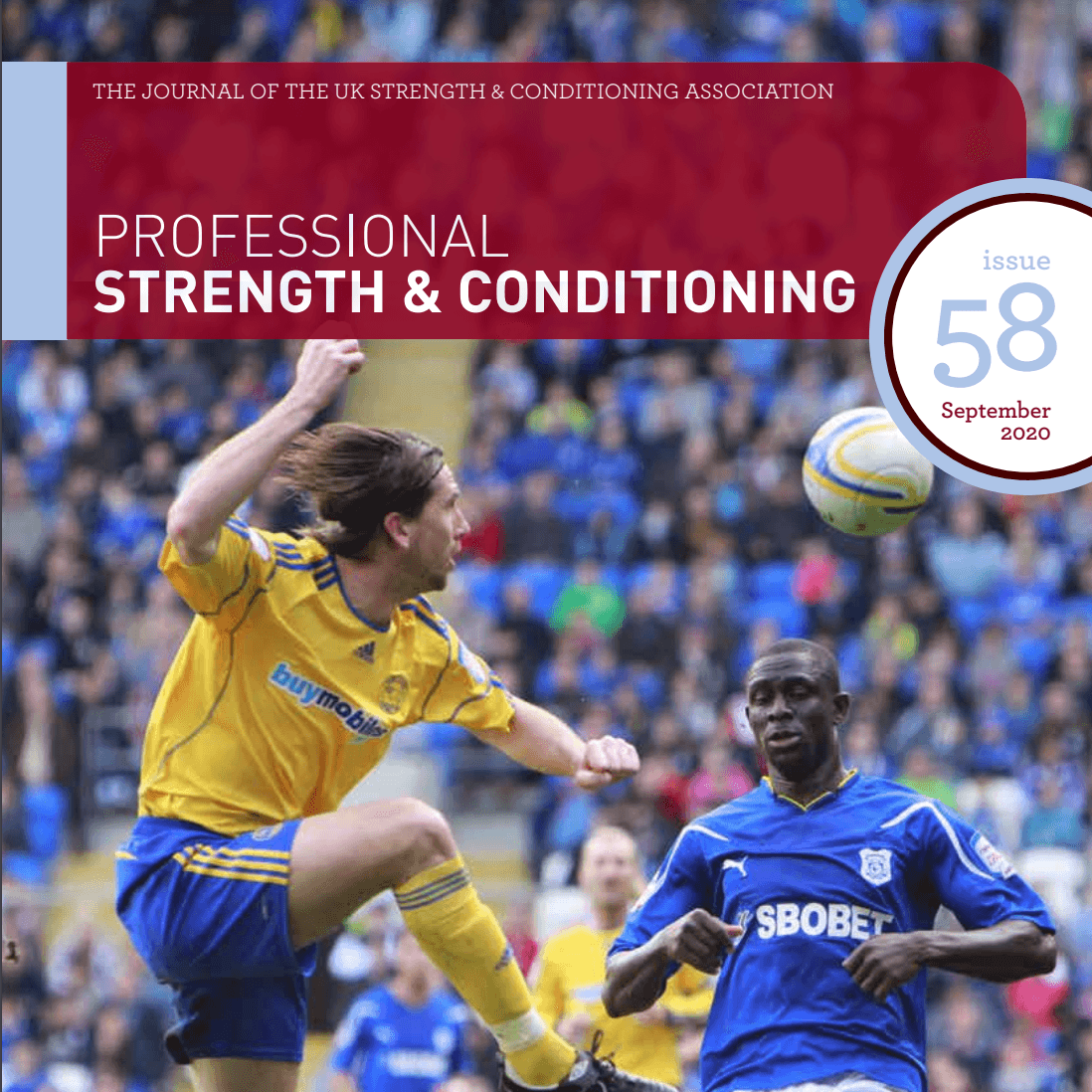
This study examines S&C provision and practices within senior professional male football. With limited research detailing how S&C programmes are implemented in elite football, the authors surveyed 51 experienced practitioners working in UK and US clubs. The questionnaire explored staff structure, strength and power development, programming approaches and the practical issues and barriers affecting S&C delivery.
All respondents believed strength training benefits football performance and incorporated lower-limb strength training within their programmes. Free-weight resistance training was the most commonly used modality, with the trap bar deadlift the most frequently prescribed exercise. Plyometric training was used by all coaches who responded to the relevant question, while eccentric training and periodisation strategies were also widely employed.
Programming was strongly influenced by the competitive schedule. In-season S&C sessions were typically 30–45 minutes, with coaches adapting training frequency and content during congested fixture periods. Lack of time between matches was identified as the greatest challenge to effective S&C provision within respondents' own clubs.
The findings also emphasise the importance of interpersonal skills in successful S&C practice. Building trust and effective relationships with players was considered the most valuable method for achieving positive engagement, followed by effective communication. The study demonstrates that successful S&C provision in elite football depends not only on evidence-based programme design, but also on adapting to fixture demands, individualising training and developing strong relationships with players and staff.