This article, the third in Ian Jeffreys’ series on systems thinking in strength and conditioning, examines the longstanding gap between academic knowledge and practical coaching. It considers how the historical development of S&C from a practice-led profession towards an increasingly scientific and academic discipline has created separate theoretical and applied pathways, each operating within different structures, incentives and ways of thinking.
Jeffreys argues that effectively bridging this gap requires more than simply transferring scientific research to practitioners. Instead, knowledge and innovation must flow in both directions, recognising the value of practitioner experience, tacit knowledge, observation and context alongside formal research and explicit knowledge. Coaches operate within complex environments where decisions involve multiple interacting factors and must often be optimised within practical constraints.
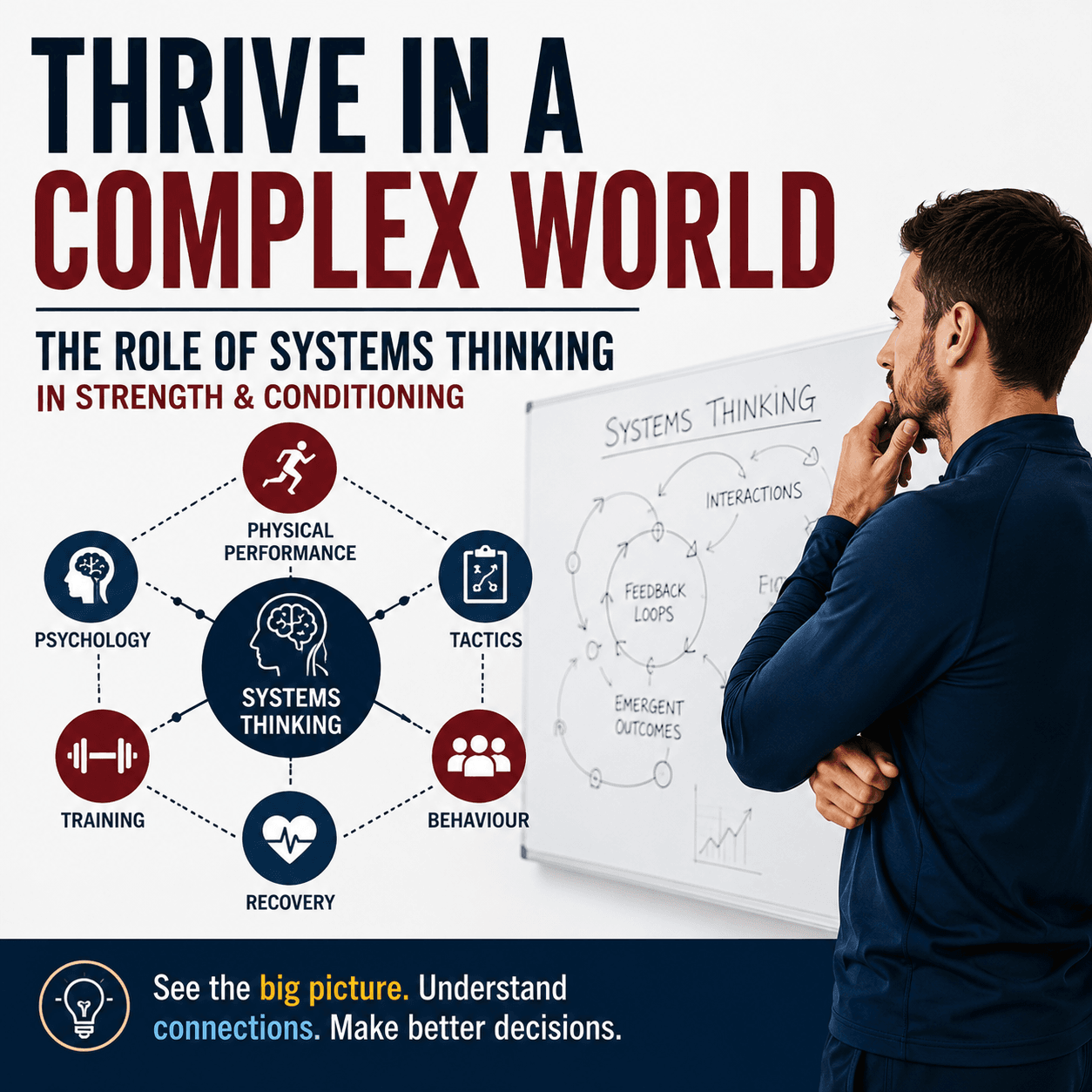
The article also questions whether traditional reductionist research methods and academic publishing structures adequately address the complexity of applied S&C. It advocates more systems-based investigative approaches that ask practically relevant questions, retain the connections between interacting factors and give applied knowledge a stronger voice. Ultimately, Jeffreys proposes that academics and practitioners must adapt together, combining scientific rigour with experience and contextual understanding to develop more effective strength and conditioning practice.

Ian is a prolific coach, author and educator who consults extensively with several international sports organisations. He is President of the NSCA, Editor of the UKSCA's journal, Professional Strength and Conditioning, and is also on the Editorial Board for the NSCA's Strength and Conditioning Journal, and the Journal of Australian Strength and Conditioning.