Dear UKSCA Membership,
We return with issue #76 and my second as Editor since taking over from Prof Ian Jeffreys. I wanted to start by saying I was thrilled to see the contents of issue #75, which included some fantastic articles. Since the creation of the new editorial board team, it appears (to me) that there has been a renewed interest in PSCJ, what it stands for and the content that we will consider publishing for the membership. This clearly manifested itself in issue #75, which saw the journal publish its first ever systematic review and a healthy balance between empirical research, review articles and our first electronic poster (as part of an official journal issue). My hope is that this balance between ‘quality and variety’ will ensure there is something for everyone in each issue, but that we also attract more submissions from those wanting to write articles and disseminate knowledge for the wider strength and conditioning community.
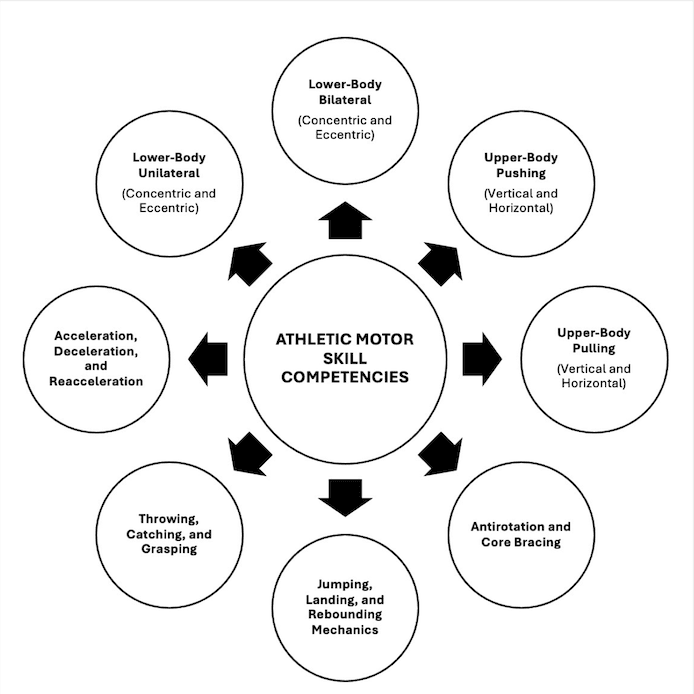
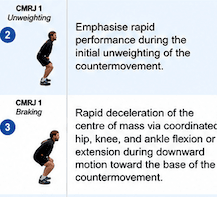
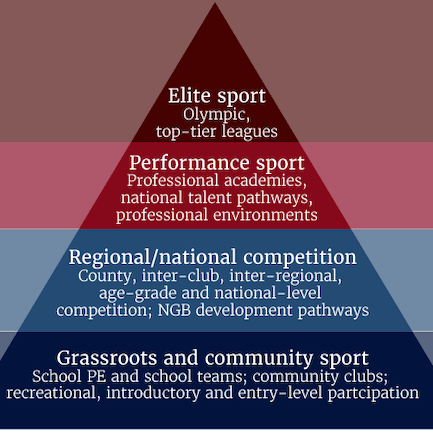
As we look forward to this issue, I am once again thrilled to be able to tell you that it contains the greatest number of articles I have ever known PSCJ to publish in a single issue. This issue, we see three empirical studies, three narrative reviews and one commentary. Specifically, when focused on the empirical studies, we have a reliability study around the Output movement sensor, a 6-week intervention study in male and female golfers and an associative study design which examines the link between the full FMS screening battery, a modified FMS screening battery and a number of athletic performance measures. Collectively, this represents a nice variety of primary research study designs. When focused on the reviews in this issue, we have a really thought-provoking piece from one of PSCJ’s editorial board team, Jermaine McCubbine, discussing how resistance training methods have been used directly after competitive matches by Jermaine and his colleagues at PSV Eindhoven. In addition, a timely article from the team at the University of Brighton focuses on developing athletic motor skills competencies and Jiaqing Xu provides a pragmatic article on how coaches can optimise testing conditions if and when they use the countermovement rebound jump as an assessment method. Last, but by no means least, Mark Williams and Jon Hughes – PSCJ’s two representatives for the Grassroots Sport sector - have written a brief commentary around how and why strength and conditioning professionals can/should consider working in this sector. In truth, I learnt a ton from this one and I’m confident that you will too! It also represents a ‘call to action’, so for those who have an interest in this particular space, I would encourage you to reach out and connect with Mark and Jon.
Lastly, and related to this idea of reaching out and connecting with us at PSCJ, the majority of the PSCJ editorial board team, including me, will be at the Annual UKSCA Conference on Saturday 12th September. If any of the membership wish to come and speak to any one of the PSCJ team, then please do make yourself known. We are especially interested in members who want to get involved in the journal, but are perhaps not entirely certain what their next steps might look like. Remember, one of the UKSCA’s core mission values is to disseminate knowledge and PSCJ serves as one viable means of doing just that. If there are ideas about how we can make the journal better or areas of the membership or our profession that you think we need to do a better job of representing, then we want to hear from you. So please, do come and say hello to us if you are at the conference on the Saturday. Until then, I wish everyone a fantastic few months over the summer and if you have an idea that cannot wait, just drop me an email: C.Bishop@mdx.ac.uk.

Chris is the current Head of Department at the London Sport Institute, Middlesex University and has published over 300 peer-reviewed journal articles, edited / co-edited 3 textbooks and serves as the Editor-in-Chief of the UKSCA’s Professional Strength and Conditioning Journal, as well as a Senior Editor/Associate Editor for NSCA’s 2 flagship journals. From an industry perspective, Chris has a keen interest in all things training and testing for athlete and clinical populations. More recently much of his time is dedicated to the world of Performance Science in Golf, where he is the Principle Investigator for Sports Academy – the health, medicine and performance arm of the PGA of America and also on the Science and Medical Advisory Board for The R&A, DP World Tour and Ladies European Tour.
Google Scholar: https://scholar.google.com/citations?user=jep0KcEAAAAJ&hl=en